If you’re caring for an elderly parent, you may be able to claim them as a dependent on your tax return. Doing so could open the door to additional credits, deductions, and other tax benefits that help ease the financial burden of providing for their care.
Can I claim my parent as a dependent?
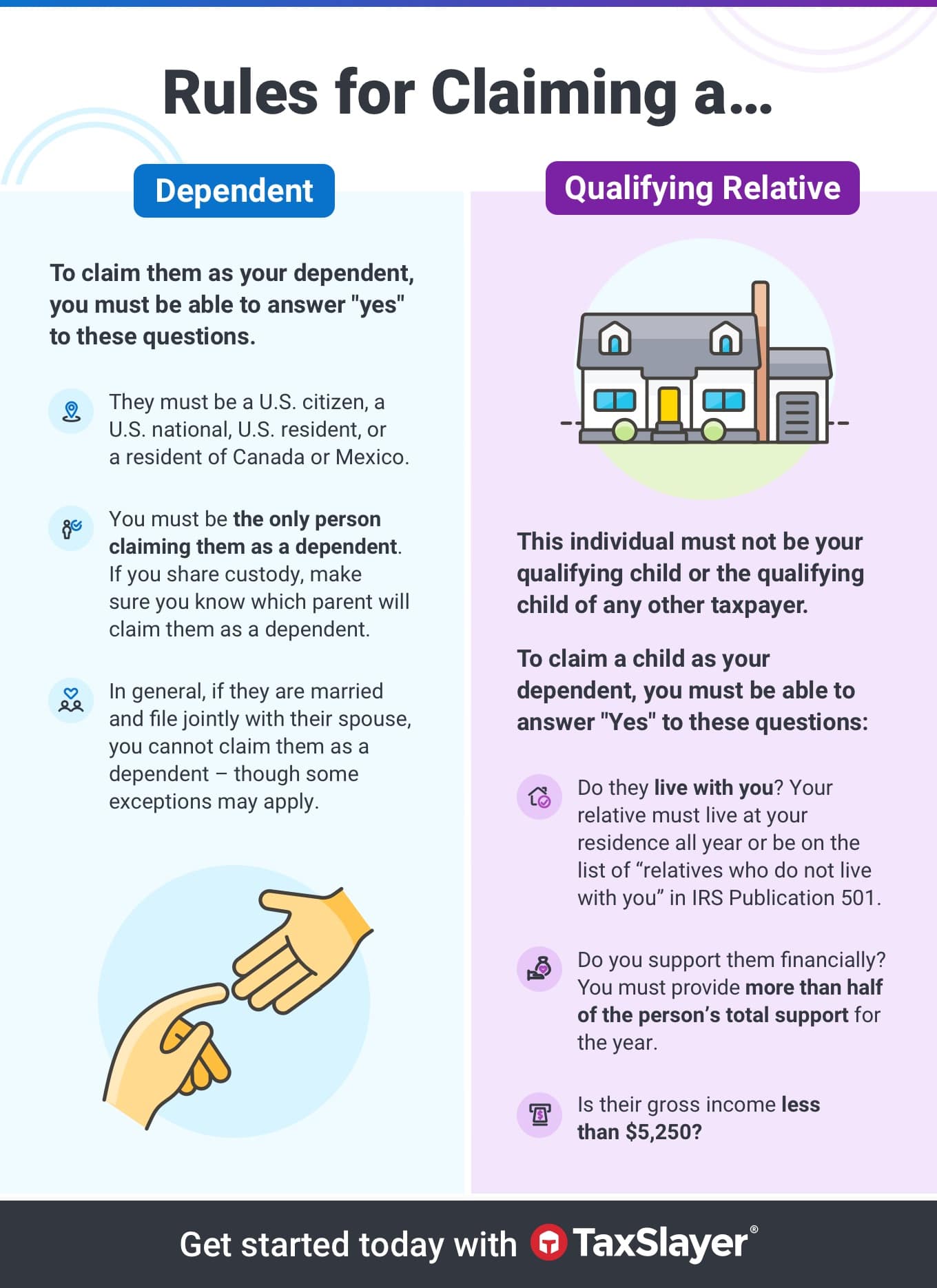
Possibly. The Internal Revenue Service (IRS), the U.S. government agency responsible for enforcing federal tax laws, does allow parents, grandparents, and other relatives to be claimed as dependents. But first, there are specific qualifications that must be met:
Residency and relationship requirements
Before you can claim your parent as a dependent, they must meet the IRS requirements for qualifying relatives. That is, they must berelated to you by blood, adoption, or marriage (if claiming an in-law as a dependent). Additionally, they must be a U.S. citizen, U.S. resident, U.S. national, or a citizen of Canada or Mexico. Your parent does not need to live with you to qualify as your dependent.
Filing status requirement
Your filing status must be Single, Married Filing Jointly, Married Filing Separately, or Head of Household, and you must not be claimed as a dependent on anyone else’s return if you’re going to claim a dependent.
Also note that if your parent files a joint tax return, you may not be able to claim them as a dependent.
Support requirement
You must provide more than half of your parent’s financial support during the current tax year to claim them as a dependent.
Compare the monetary value of support you provide to the amount of your parent’s income, including Social Security, to determine whether or not you meet the support requirements. Your support must exceed your parents’ income by at least one dollar.
Here are some tips to help you determine the monetary value of the support you provided to your parents:
- Calculate the fair market value of your parent’s room in your home
- Consider the cost of the food that you provide
- Add up the cost of utilities, medical bills, and general living expenses that you provide
Income requirement
To qualify as your dependent, your parent must not have earned more than the gross income limit for the specific tax year. This amount changes every year, so be sure to look at the most updated amount. For tax year 2025, their gross income should not exceed $5,250. For tax year 2024, the amount their gross income must not exceed was $5,050.
It’s important to note that Social Security income does not usually count towards gross income, but if your parent has additional income from interest or dividends, a portion may be taxable.
Does my aging parent need to file taxes?
Your parent might not be required to file. Look at their gross income, which includes any income they receive throughout the tax year that is not exempt. This does not typically include Social Security benefits. If their gross income amount is below the IRS threshold for their age and filing status, your parent will most likely not be required to file a tax return.
There are special situations that may require your parent to file even if their income is below the ceiling. For example, if they had federal taxes withheld from a pension, even if their total income falls below the filing threshold, or if they received certain types of income, such as more than $400 in self‑employment earnings, they may be required to file.
In the case where your parent does need to file, TaxSlayer makes it simple for you to work together. You can help them gather their tax documents, walk them through the step‑by‑step instructions for each part of the return, and get it filed on time.
Can I claim my parent as a dependent if they receive Social Security income?
Yes, you can claim your parent as a dependent even if they receive Social Security income, including retirement benefits and disability benefits (SSDI). Social Security benefits typically do not count as gross income for the IRS income test, so as long as your parent’s other taxable income is below the annual limit and you provide more than half of their financial support, they may still qualify as your dependent.
Can more than one person claim a parent as a dependent?
As a rule, a person can only be claimed as a dependent on one tax return. If multiple people claim the same dependent, the IRS will accept the first return filed and reject the others.
When multiple adult children or relatives are contributing to cover your parent’s household expenses, it can be difficult to decide which one of you should claim them as a dependent. The rule for claiming dependents states that the relative who provided more than half of your parent’s financial support throughout the year is eligible to claim them as a dependent on their taxes.
In some situations, no single person covers over 50% of the dependent’s expenses. Let’s look at what happens if multiple people provide support and how the IRS determines who can claim them.
What happens if multiple people provide support?
If there isn’t any one person who paid over 50% of your parent’s expenses, then anybody who paid 10% or more of their support may be able to claim them as a dependent. But first, you’ll need to meet these additional criteria:
- You, with one or more other eligible person, contributed over half of that person’s support.
- The other requirements to determine dependency are met.
- Anyone else who is eligible and paid over 10% of the support provides a signed statement agreeing not to claim your parent as a dependent.
If you meet these requirements, then you’ll need to complete a multiple support agreement using Form 2120 to identify each person who contributed more than 10% of their income to support your parent throughout the year. Each person listed on the form waives their right to claim them on their tax return because they didn’t meet the 50% requirement.
The relative who claims your parent on their tax return will file Form 2120 along with their 1040. This agreement is only valid for one tax year, so a different relative listed on the form can claim your parent as a dependent if you waive your right to claim them in future years. To keep track of who claims your parent as a dependent each year, make sure to store a copy of the completed agreement to reference when it’s time to file.
How do I claim my parent as a dependent?
Once you determine that you meet the qualifications, here are some steps to take to claim your parent as a dependent:
- Gather documentation: Collect the records that show you meet all the requirements. This may include receipts, bank statements, medical bills you paid, or other proof that you provided most of your parent’s support throughout the year.
- Complete tax return: When preparing your return, be sure to include your parent as a dependent and claim any available tax credits or deductions tied to dependent care or support.
- Review before filing: Look over your entire return carefully to ensure names, identification numbers, income, and dependent details are all entered correctly.
- Save your records: Once your return is submitted, keep copies of all relevant tax forms. These can be helpful if the IRS requests additional information later.
Tax benefits of claiming parents as dependents
There are several tax breaks you may qualify for when claiming your parent as a dependent, including credits and deductions that you may be eligible to take as the caregiver to your elderly dependent.
Medical and dental expenses deduction
Deduct your elderly dependent’s medical and dental expenses if you claim them as a dependent. If you are itemizing your deductions, you can deduct unreimbursed medical and dental expenses that exceed 10% of your adjusted gross income.
Dependent Care Credit
Even though this credit is officially called the Child and Dependent Care Credit, you may be eligible to claim it if you paid another person to care for your elderly dependent while you were working. This credit is nonrefundable.
To be eligible, you (and your spouse if you’re married) must earn income during the year and claim your parent(s) as your dependent(s). You must also identify your care provider by entering their name, address, and employer identification number or Social Security number. You cannot claim this credit if you file as married filing separately.
Family Tax Credit
Even though your elderly dependents will not be eligible for the Child Tax Credit, they may qualify for the Family and Other Dependents Credit. This is a nonrefundable $500 credit introduced by the Tax Cuts and Jobs Act. It applies to most elderly and disabled dependents.
Your employer’s dependent care benefits
Your employer may offer a dependent care flexible spending account, which could cover the care of elderly dependents.
If you use one of these plans, the IRS will exclude some of your income that you designate to put in a dependent care FSA account. You will not have to pay income taxes on this money.
Can you claim head of household with a parent as a dependent?
Yes, you can file as head of household if you meet the following requirements:
- You are not married
- You were responsible for more than half of the cost of maintaining your home for your parent during the tax year
- Your parent isn’t required to live with you
Filing as head of household means you receive a larger standard deduction, which may help offset the cost of being a caretaker.